

Meta Description: How much do custom plush toys cost in China? Learn what affects plush toy pricing, including size, fabric, filling, design, accessories, MOQ and packaging. URL Slug: /custom‑plush‑toy‑cost‑china/
One of the top questions for brands, retailers and business buyers sourcing overseas is: How much does it cost to make a custom plush toy in China?
There is no fixed one‑size‑fits‑all price. Final pricing changes based on product design, dimensions, raw materials, order volume and your customization demands. Understanding these key cost‑driving factors will help you build a realistic sourcing budget for custom plush goods.
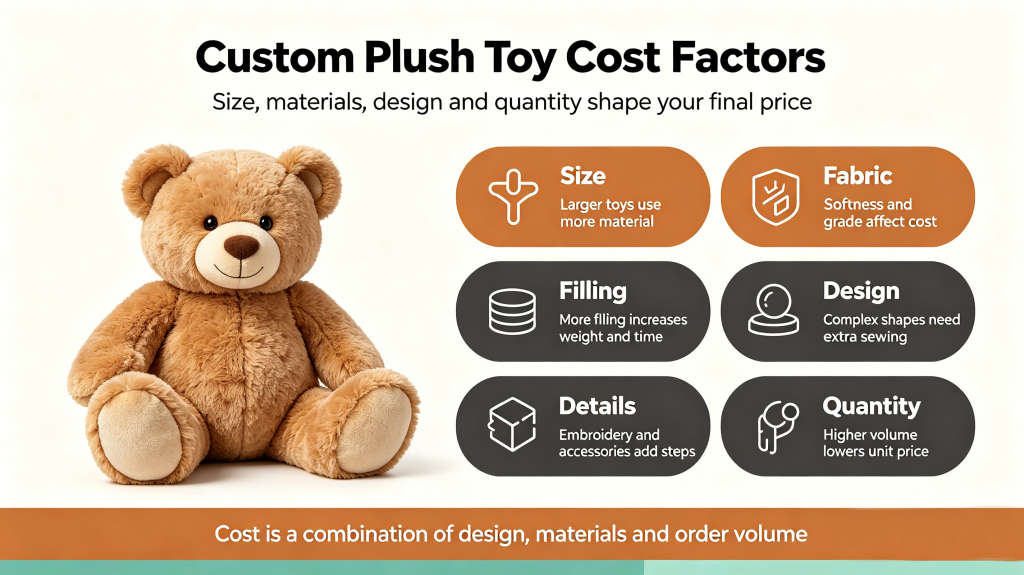
1. Plush Toy Size
Size is one of the biggest drivers of unit cost.
A larger custom plush toy consumes more resources across the whole production process:
- Extra plush fabric
- More stuffing / filling material
- Longer sewing and assembly work
- Bigger packaging materials
Even a small increase in dimensions can push your per‑unit cost noticeably higher.
2. Fabric Selection
Fabric directly impacts appearance, soft hand‑feel, durability, color performance and overall product grade.
Common plush materials carry different price points. If you need a special‑grade fabric, confirm with your supplier whether the material is in‑stock or needs special procurement, as custom‑sourced fabric will add extra expense and lead time.
3. Filling & Stuffing
The type and volume of filling also influence your final cost.
Thicker, fuller plush toys require more filling material and longer manufacturing time. Light‑fill versus heavy‑plump specifications will create clear gaps in quotation, so make your stuffing requirements clear when requesting quotes.
4. Design Complexity
Simple plush toys with basic shapes are fast and low‑cost to produce. Intricate custom designs raise manufacturing difficulty and expense.
Complex projects often involve:
- Additional sewing and stitching steps
- Multiple different fabric pieces
- Small built‑in accessories
- Detailed embroidery work
- Special structural construction
5. Embroidery & Printing
Logos, facial features, patterns and brand graphics are usually finished via embroidery or surface printing.
Cost variables for this step:
- Number of graphic positions on the toy
- Graphic dimension
- Total color count
- Production technique (embroidery / silk‑screen / heat transfer printing)
6. Extra Accessories
Many custom plush products add decorative or functional parts that increase production costs:
- Hats, scarves and clothing
- Small bags and ornaments
- Plastic hard components
- Other special decorative details
List all accessories in your requirement sheet to avoid unexpected extra charges later.
7. Order Quantity & MOQ
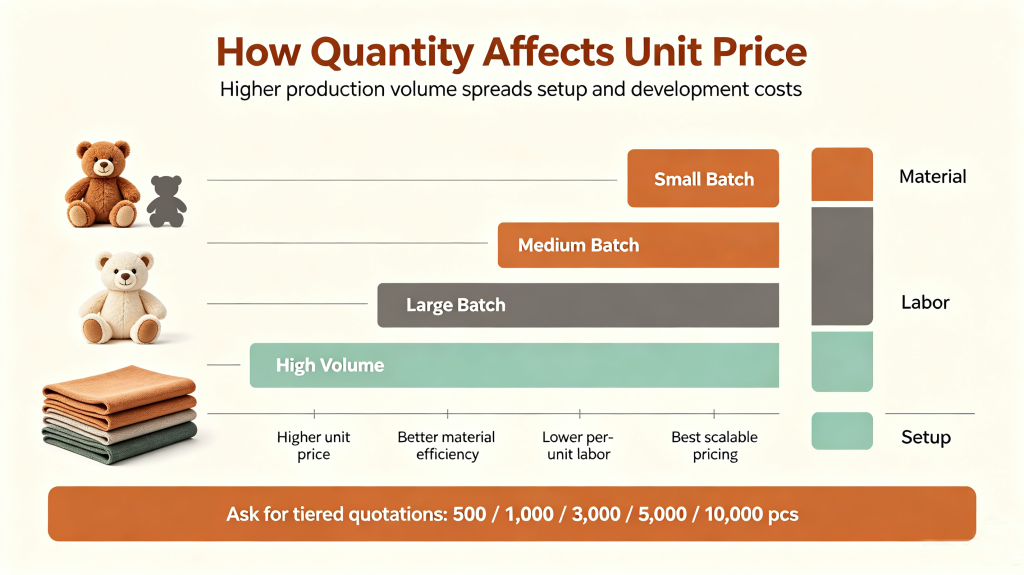
Order quantity strongly affects your unit price.
Higher volumes spread one‑time mold‑opening, pattern‑making and setup costs across more finished goods. Always ask suppliers for tiered price breaks for different batch sizes.
Common reference order tiers for custom plush: 500 pcs | 1,000 pcs | 3,000 pcs | 5,000 pcs | 10,000 pcs
Comparing tiered pricing helps you see exactly how volume changes your landed cost.
8. Packaging Options
Packaging ranges from basic poly bags to full‑color retail‑ready custom boxes.
Available packaging solutions:
- Simple individual polybags
- Paper hang tags
- Custom printed color boxes
- Brand‑designed outer packaging
- Barcode labels for retail shelves
Always include packaging requirements inside your initial quote request. Do not leave packaging discussions until after sample confirmation.
9. Sampling Development Cost
Nearly all custom plush toy projects require paid sample development before mass production.
Samples allow you to verify every critical detail:
- Overall shape and proportion
- Exact finished size
- Fabric texture
- Color matching
- Embroidery & print effect
- Filling fullness
- Structural workmanship
Lock down all technical specs during the sample phase. Confirm bulk‑order pricing only after sample approval.
How to Request an Accurate Custom Plush Toy Quotation
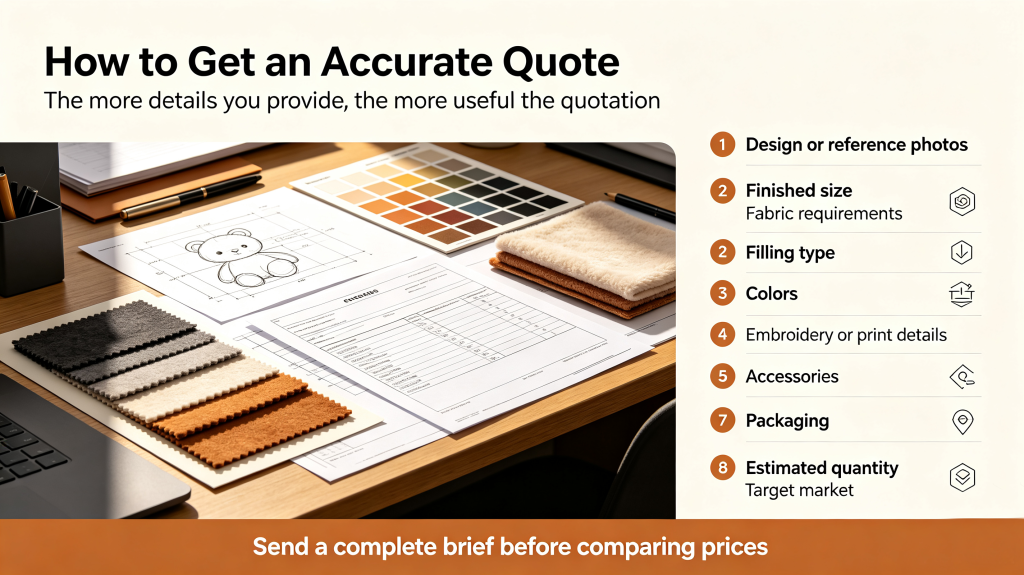
Send your Chinese manufacturer complete information below to receive precise pricing:
- Design drawing or reference product photos
- Exact finished dimensions
- Fabric requirements
- Filling / stuffing standard
- Defined color palette
- Embroidery or printing artwork & placement
- List of accessories
- Packaging specifications
- Estimated order quantity
- Target sales market
The more complete your brief, the more accurate and useful your supplier quotation will be.
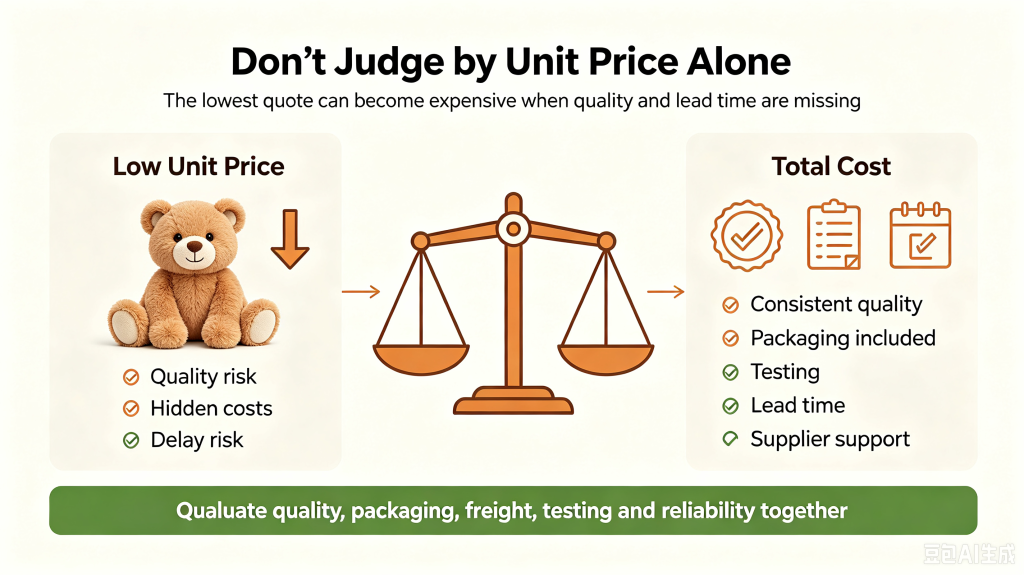
Do Not Judge Suppliers Only By Unit Price
An extremely low per‑unit price does not always equal the lowest total landed cost.
When comparing vendors, evaluate the full picture:
- Consistent product quality and defect control
- Packaging quality
- Final shipment volume for freight calculation
- Mandatory product safety testing
- Production lead‑time reliability
- Supplier communication & after‑sales support
Going with the cheapest quote can create heavy losses caused by delayed shipments, quality failures or compliance issues.
Frequently Asked Questions
What is the typical MOQ for custom plush toys?
Minimum order quantity differs depending on toy size, fabric selection, design complexity and customization work. Small simple custom plush can support lower MOQ, while highly‑custom complex items need larger batches.
Can I produce plush toys based on my own drawings?
Yes. OEM plush manufacturers can develop finished goods from hand‑drawn artwork, digital designs or physical prototype samples.
Can I print or embroider my brand logo on plush toys?
Absolutely. Brand logos can be realized by embroidery, heat‑transfer printing, woven labels or printed outer packaging solutions.
How long does custom plush toy development take?
Sample turnaround depends on how complex your design is and communication efficiency. Mass‑production starts only after you fully approve the pre‑production sample.
Conclusion
Custom plush toy cost is determined by multiple combined factors: size, fabric, filling, design complexity, decorative details, order quantity and packaging.
Whether you need custom plush for retail collections, promotional giveaways, corporate gift programs or private‑label brand lines, Maxzopo can evaluate your requirements and work out a suitable solution for your budget.
Share your plush toy design and target order quantity with us to get your tailored quotation.Many buyers source custom plush toys from Chinese OEM factories.
